
The Birth of Rock 'n' Roll: How Little Richard, Elvis, and the 1955 Revolution Changed History
The Seismic Fracture: When the World Finally Broke
Nineteen fifty-five wasn't just a year on the calendar; it was a crime scene. It was the moment the global psyche snapped. Before the stadium tours turned rebellion into a line item and marketing teams boiled angst down to a science, Rock 'n' Roll was a shadow-born anomaly that genuinely terrified the people in charge. It wasn't "entertainment." It was a threat. It was a rhythmic intrusion looking to kick in the teeth of the moral architecture the West had spent a decade building after the war.
And make no mistake, it was a war cry. It belonged to a brand new species: the American teenager. Suddenly, these kids had time, they had freedom, and they had money—spending power was hitting unprecedented heights, creating a $10 billion-a-year market that was desperate for something their parents hated.
The Architect: Richard's Riot
If you want to pinpoint the exact second the fuse was lit, forget the history books. Look at a lunch break in a New Orleans recording studio, September 1955.
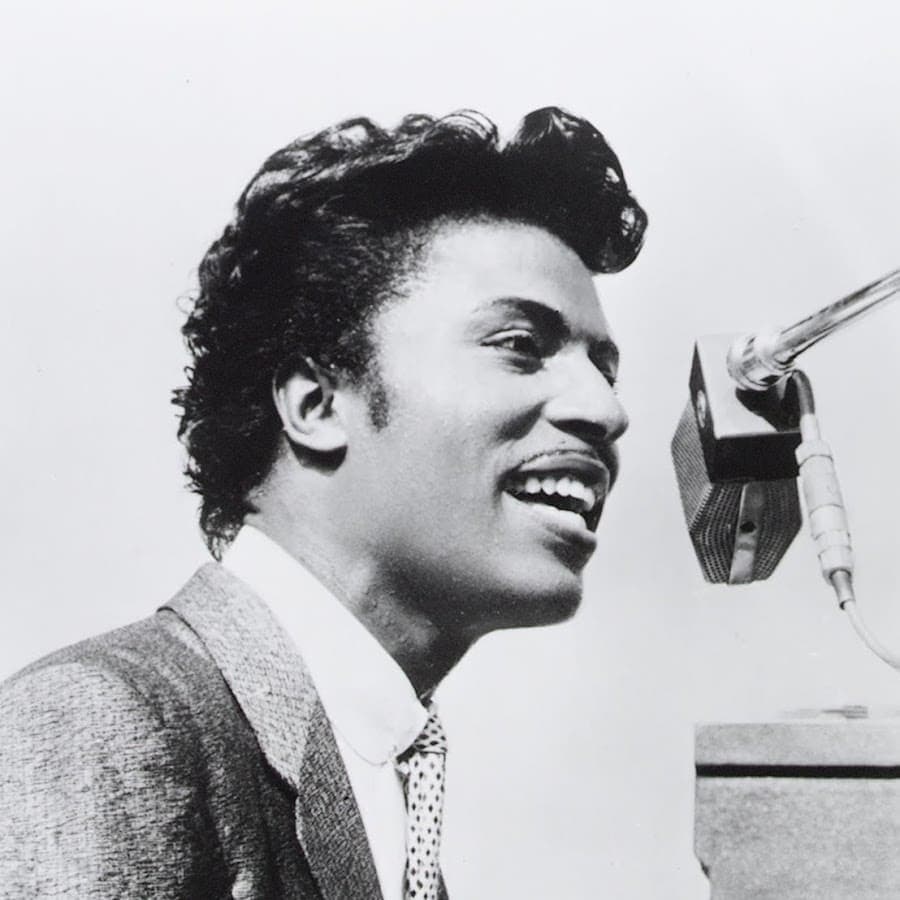
Little Richard—born Richard Wayne Penniman—was dying a slow death in a session with producer Bumps Blackwell. The energy was dead. He couldn't get his live ferocity onto the magnetic tape. So, out of pure frustration, he started pounding a rhythm on the piano that sounded less like music and more like a jackhammer. Then he opened his mouth and screamed: "A-wop-bop-a-loo-bop-a-lop-bam-boom!"
That wasn't a lyric. It was the Big Bang. That was the birth of "Tutti Frutti," and the world has been vibrating ever since.
The Queer Roots of the Big Bang
Let's be clear about "Tutti Frutti": it wasn't some immaculate pop conception. It was a sanitized version of a dirty joke. In its raw form, the track was a ribald anthem about sex—specifically anal sex—that Richard performed in the gay clubs of New Orleans and Atlanta. This was the "black sexual underground" of the Jim Crow South, where Richard had cut his teeth as a drag performer named "Princess Lavonne."
That background is exactly where Rock 'n' Roll got its visual language. Richard learned from queer R&B legends like Billy Wright and the wild pianist Esquerita. He stole the pompadour. He stole the thick pancake makeup. And that makeup wasn't just for show—it was survival. Richard realized that if he looked effeminate, he could play white clubs without the white men viewing him as a sexual threat to their women. It was a "pass" that kept him alive in an era where Black bodies were in constant peril.
The industry had to clean it up, obviously. They brought in local songwriter Dorothy LaBostrie to scrub the lyrics. "Tutti Frutti, good booty" became "aw rooty." Instructional lines about "greasing it to make it easy" were swapped for nonsense about girls named Sue and Daisy. Richard was actually sheepish about the whole thing, singing with his back to LaBostrie during the session. But even scrubbed clean, the track retained a raw, "uncoverable" energy that polite society just couldn't swallow.
Defensive Velocity: The Mechanics of the Backbeat
Richard's secret weapon was the "manic triplet" and the heavy backbeat. He didn't play the piano; he attacked it.
When he followed "Tutti Frutti" with "Long Tall Sally," he intentionally ramped the tempo up to a frantic pace. This was a strategic, defensive maneuver. He wanted to thwart white "crooners" like Pat Boone, who were notorious for hijacking R&B hits and making them "polite" for white audiences. Richard and Blackwell decided to up the tempo specifically so Boone "wouldn't be able to get his mouth together to do it."
That rhythmic aggression is the foundation for everything from Heavy Metal to Punk. By emphasizing the second and fourth beats—the heavy backbeat—they disrupted the traditional "sweet" arrangements of pop music. It invited a physical response from listeners that the clinicians of the time viewed not as dancing, but as a form of neurological distress.
The King: Visual Weaponry
If Little Richard was the fire, Elvis Presley was the smoke that filled every room.
In 1956, Presley released "Heartbreak Hotel," a track inspired by a newspaper story about a suicide. It was dark, echo-drenched, and haunting—a ghost story that sounded nothing like the "happy" pop on the radio. This was followed by the double-sided knockout of "Hound Dog" and "Don't Be Cruel." Presley took the grit of the blues and the twang of country and fused them into a weapon of mass seduction.
The Pelvis and the Spectacle of Censorship
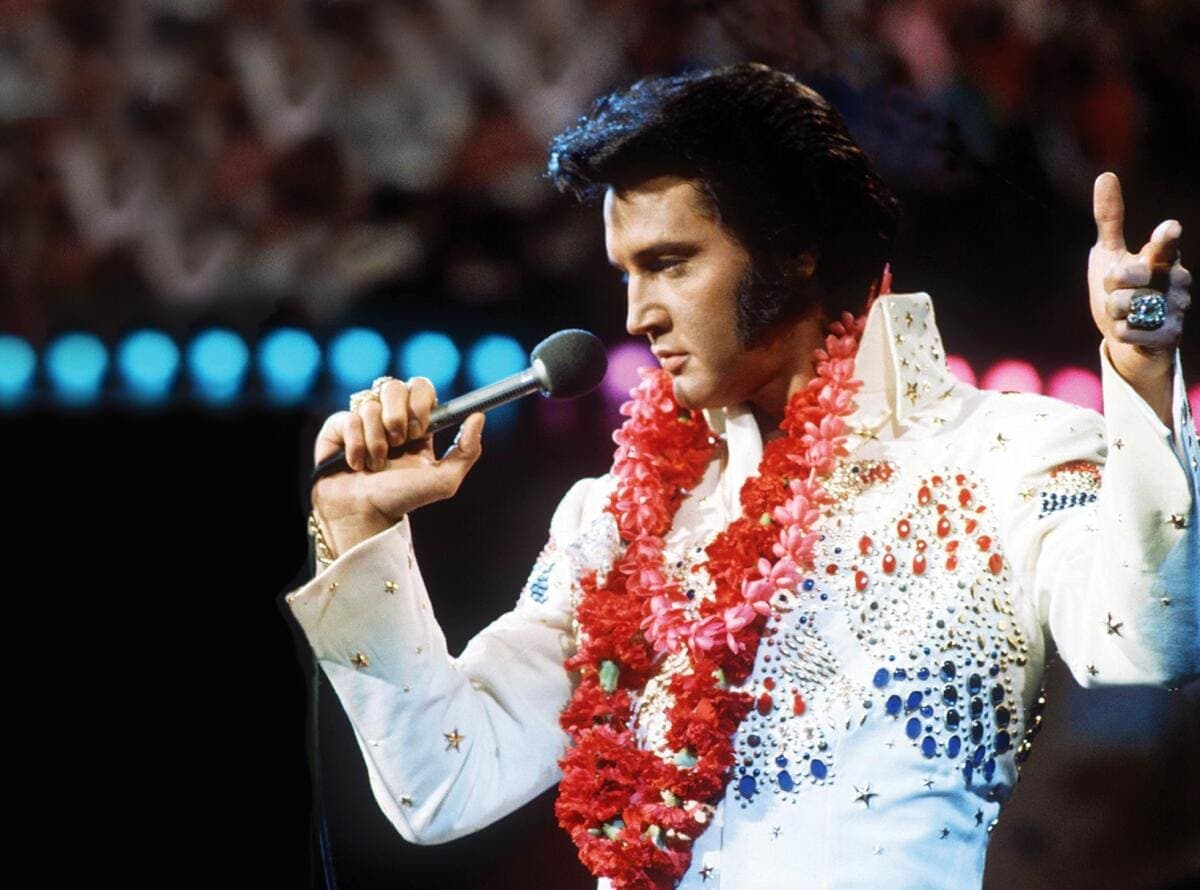
Naturally, the physical nature of Presley's performance—specifically that "rotating pelvis"—became the center of a national nervous breakdown. In June 1956, his appearance on The Milton Berle Show provoked outrage. Critics described his gyrations as "animalism" that should be "confined to dives and bordellos," labeling the act "appalling musically" and comparing him to a "victim of the St. Vitus Dance."
This led to the famous censorship on The Ed Sullivan Show, where cameras were ordered to film Presley only from the waist up. The establishment believed that if the public didn't see the pelvis moving, they'd be safe from "indecency."
It failed. The youth had found their King, and the establishment had found its greatest nightmare: a "guitar-playing Marlon Brando" who symbolized a culture looking its parents in the eye and saying "No."
Presley pushed back against these labels. He claimed he was "not trying to be vulgar" but simply "couldn't sit stiff" when he sang. But religious leaders like Reverend Gray of the Trinity Baptist Church weren't buying it, publicly stating that Presley had reached a "new low in spiritual degeneracy."
The Shadow of the Snowman: Carny Logic
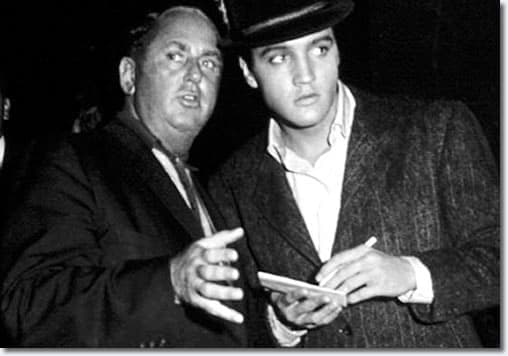
Standing in the shadow of the King was the enigmatic Colonel Tom Parker. But Parker wasn't a Colonel, and he wasn't from West Virginia. He was Andreas Cornelis Dries van Kuijk, a Dutch illegal immigrant who ran his business like a traveling carnival. They called him "The Snowman"—a term of endearment for a guy who could "snow" or con an audience blind.
Parker's management style was pure carny. In his early days, he was famous for an act involving "dancing chickens." The trick? He'd scatter feed on a hot wax cylinder so the birds would hop to avoid burning their feet. To the rubes, it was dancing. To Parker, it was just motivation. He applied that same brutal logic to Presley. He treated Elvis as the star attraction in a sideshow, prioritizing the quick cash grab over artistic integrity every single time.
Parker took a staggering 50% of the gross. He made decisions that sacrificed legacy for rent money—like in 1973, when he sold Presley's entire back catalog for a pitiful $5.4 million, pocketing half. His illegal status is the only reason the King never toured the world. Despite massive demand in Japan and Europe, Parker blocked the tours, terrified he'd be denied re-entry to the U.S. if he left. That fear trapped Presley in the endless, soul-crushing cycle of Las Vegas residencies, grinding out shows to pay off Parker's gambling debts, which were rumored to hit $30 million.
The Establishment Strikes Back: Panic and Legal Warfare
The rise of rock 'n' roll triggered a textbook "moral panic." This wasn't just a generation gap; it was collective hysteria. Sociologists saw it as a fear of juvenile delinquency, "race mixing," and sexual chaos. Suburban parents were genuinely "freaked out" by the idea of their daughters listening to "primitive, sensuous beats" in the dark.
The war went hot in May 1958 at the Boston Arena during Alan Freed's "Big Beat Show." The crowd was racially integrated, the acts—Jerry Lee Lewis, Chuck Berry—were on fire, and the police were itching for a fight. They kept interrupting the show, unnerved by the "raucous rhythms." When Freed allegedly told the crowd, "It looks like the police in Boston don't want you kids to have any fun," a scuffle broke out.
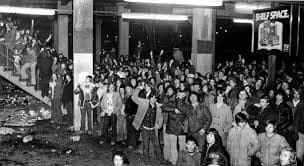
The Boston Globe ran sensational headlines about "rock 'n' roll hoodlums" slugging and robbing people, but modern analysis suggests most of that was fiction. Only two arrests were made. Still, Boston banned rock concerts. Freed was indicted under a delightfully archaic Massachusetts "anti-Anarchy Law," a 19th-century statute meant to punish government overthrow attempts. The charges were dropped, but the message was clear: the establishment was shooting to kill.
Psychiatric Theories of "Menticide"
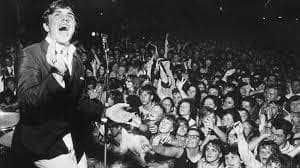
The medical community didn't sit this one out. Psychiatrists in the '50s frequently labeled rock 'n' roll as a form of "menticide"—a term coined by psychiatrist Joost Meerloo to describe the destruction of the mind. Critics argued that the "wild" music and repetitive beat induced artificial neurosis. They likened the "Big Beat" to "jungle toms" preparing warriors for battle, accusing the music of bypassing the conscious mind to stimulate "primitive" biological urges.
The Original "Deal with the Devil"
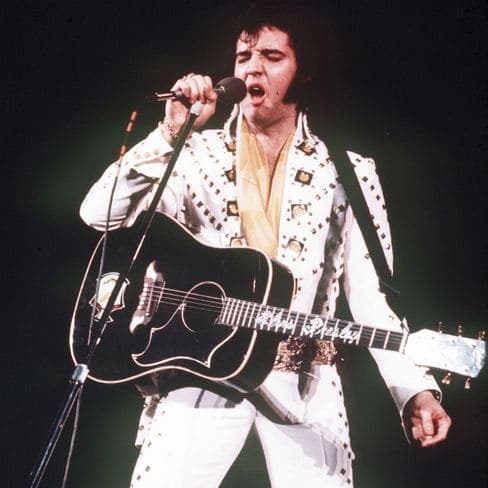
The explosive rise of these artists fueled the myth of the "Crossroads"—the idea that such talent required a supernatural pact. And the artists paid the price, constantly torn between the secular and the sacred.
Little Richard's career was defined by this oscillation between "Gospel and the Blues." In late 1957, during a tour of Australia, Richard saw the apocalypse coming. On a flight from Melbourne to Sydney, he hallucinated angels holding up the plane's red-hot engines. Then, performing in Sydney, he saw a brilliant red fireball streak across the sky—which was actually the Russian satellite Sputnik 1.
Convinced the world was ending, Richard threw his diamond rings into the Hunter River and quit rock 'n' roll for the ministry. His conviction cemented when he found out the plane he was originally booked on to return to the U.S., Pan Am Flight 7, had crashed into the Pacific, killing everyone on board. He viewed his survival as confirmation: he had to "get right with God."
For Elvis, the "Deal" was a slow drift from rebellious greaser to a golden-caped icon in decline. Trapped by Parker's exploitation and his own substance abuse, Presley became a prisoner of the Vegas "cycle," performing matinee and midnight shows that "wrecked his creativity and then his body." The cost of the talent was a life under surveillance, where the image consumed the man.
The War for the Soul: Pat Boone and the Bleach
A critical theater of this war was the practice of "covering"—re-recording R&B hits with white performers to reach the mass market. Pat Boone was the poster boy for this, representing the "opposite of threatening." He released versions of Fats Domino's "Ain't That a Shame" and Little Richard's "Tutti Frutti."
Richard was clear about the racism fueling this. He noted that "white kids would have Pat Boone up on the dresser and me in the drawer 'cause they liked my version better, but the families didn't want me because of the image I was projecting." Boone softened the edges; "Long Tall Sally," which was "built for speed" in Richard's version, became "built sweet" in Boone's. While these covers generated royalties for Black composers, they served to "blandify" the music for middle-class consumption.
The Vindication: The Persistence of the Big Bang
While the 1950s establishment viewed the backbeat as a neurological menace, modern neuroscience tells a different story. Research from the University of Queensland has revealed that "extreme" music actually helps listeners process anger and inspires calmness. The driving rhythms that once triggered a moral panic are now understood as emotional catharsis—exactly what a generation suppressed by post-war conformity desperately needed.
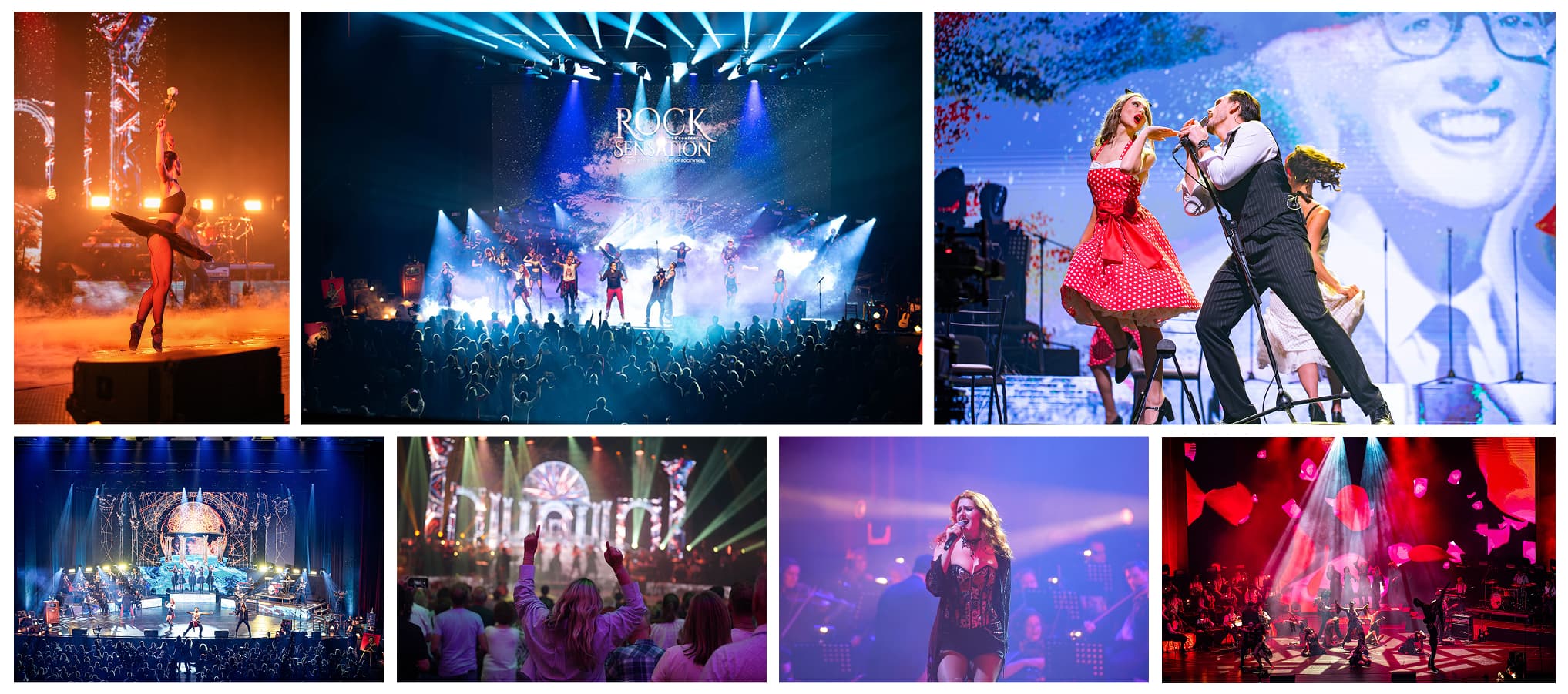
The 1950s explosion was the "Big Bang," and every distortion pedal and stage dive since is just an echo of that original fracture. To feel that dangerous electricity today, you have to return to the "magnificent unhinged" energy that made the world tremble. Modern productions like "Rock Sensation" attempt to recapture this by fusing raw rock bands with the cinematic power of a full orchestra.
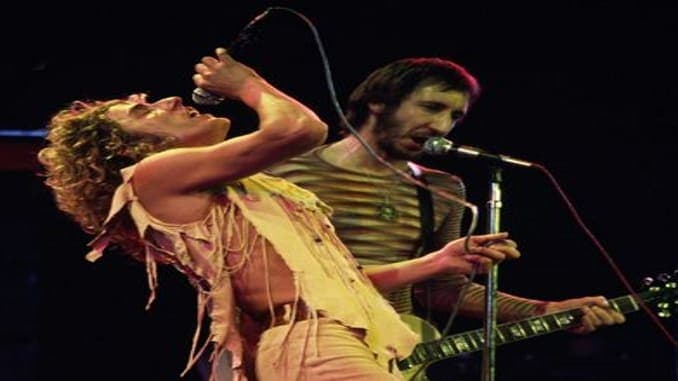
This orchestral fusion amplifies the "danger" and "scale" of the music. By layering symphonic arrangements over thunderous riffs, these performances mimic the emotional intensity of 1955. It creates a "film-score atmosphere" where distorted leads drive the energy to levels traditional concerts are often afraid to touch.
Ultimately, the world didn't just hear a new sound in 1955; it witnessed a fundamental shift. Little Richard, the "Architect," provided the structural aggression and queer-coded flamboyance. Elvis, the "King," provided the visual charisma. The establishment's attempt to sanitize and ban them only highlighted their potency. The Big Bang of rock 'n' roll was the moment youth culture looked its parents in the eye and said "No"—and the echo of that "A-wop-bop-a-loo-bop" still rings out today.
The Live Resurrection
Reading about the explosion is safe. Standing in the blast radius isn't.
To truly understand the seismic fracture of 1955, you can't just listen to a record—you have to feel the floor shake. Rock Sensation resurrects that original, dangerous electricity by fusing a full rock band with the crushing, cinematic power of a symphony orchestra. It's not just a concert; it's a physical experience that hits you right in the chest.
Don't just study the history. Witness the noise.
Experience the fracture live. Get your tickets now at rocksensation.live